



Our take on agroecology
Sed ut perspiciatis unde omnis iste natus error sit voluptatem accusantium doloremque.
Agroecology Definition: History And Examples
Agroecology encompasses the relationship between agricultural production systems and ecological processes. It includes all the techniques that allow agricultural practices to be more respectful of the environment and its ecological specificities.
Agroecology is an interdisciplinary combination of agronomy, agriculture, scientific ecology, economics, and social sciences. It integrates practices such as organic farming, regenerative agriculture, some aspects of permaculture and therefore contributes to sustainable development.
Agroecology is characterized by a global conception of agro-food production systems and it relies on the natural features of ecosystems to amplify them. This helps minimize the pressures on the environment and preserve the renewal capacity of the ecosystem services.
According to FAO Agroecology increases the adaptive capacity and reduces the vulnerability of agroecosystems, mainly through improved soil health, biodiversity and high diversification of species and genetic resources within agricultural production systems.
History Of Agroecology: Origin And Evolution
The term agroecology first appeared in 1928 under the pen of American agronomist Basil Bensin. His understanding of agroecology then referred exclusively to the application of methods of ecology to the processes of agronomic research. This idea grew progressively during the 1960s, 1970s, and 1980s. By then, the notion of agro-ecosystem started to transform into the idea of an ecosystem modified by human activity for exploitation purposes. In the 1990s and 2000s, agro-ecology became much more global. Agro-ecosystems are now used to understand and define the entire system of production, distribution, and consumption of food resources, in all its components (agricultural, agronomic, economic, environmental and social).
Agroecology: The Principles And Their Implementation
As a systemic approach, agroecology relies on the improvement of agro-food
processes as a whole, with the constant goal of improving environmental performance. The implementation of these basic principles is expressed in two ways:
Agroecology: At The Farm Level
- Using infrastructures and cutting plots that make the proliferation of natural auxiliaries and their connection with the exploited surfaces (hedges, groves, embankments …) easier and limiting of phytosanitary inputs
- Reintroduction of the biodiversity of cultivated species as a way of improving production and environmental quality
Agroecology: At The Territorial Level
- Establishment of ecological corridors to increase and facilitate communication between habitats of auxiliary species, including pollinators
- Maintenance or redevelopment of wetlands favorable to biodiversity and water purification
- Consistent cultural practices planned considering different variables such as the type of crops, the diversity of crop varieties, crop rotations and agroforestry.
Why Agro-Ecology?
Agroecology has gradually been shaped in reaction to intensive and industrial agriculture. Indeed, modern agriculture, developed throughout the 20th century, has allowed to massively develop food production, but often at a high ecological cost. Today, the scientific community agrees that some ecological problems are partly due to intensive agriculture. For example, the massive use of pesticides and degradation of soil quality, loss of biodiversity, homogenization of soil crops, and the effects of global warming are all partly due to intensive agriculture.
More and more researchers, activists and agronomists are advocating for a redefinition of the agricultural principles of our society in order to produce a more responsible and resilient farming system. Agroecology tries to meet this need because it aims to produce a more sustainable and ecological farming system.

The 13 Key Principles of Agroecology
In 2019, the High-Level Panel of Experts on Food Security and Nutrition (HLPE) published the 13 principles of agroecology.
The HLPE is a science-policy interface of the UN Committee on World Food Security (CFS) commissioned by the UN Food and Agriculture Organization (FAO). The 13 Principles are increasingly accepted as a road map for holistic food systems transformation, including by the NEPAC.
Co-Creation of Knowledge

Enhance co-creation and horizontal sharing of knowledge including local and scientific innovation, especially through farmer-to-farmer exchange.
Social Values & Diets
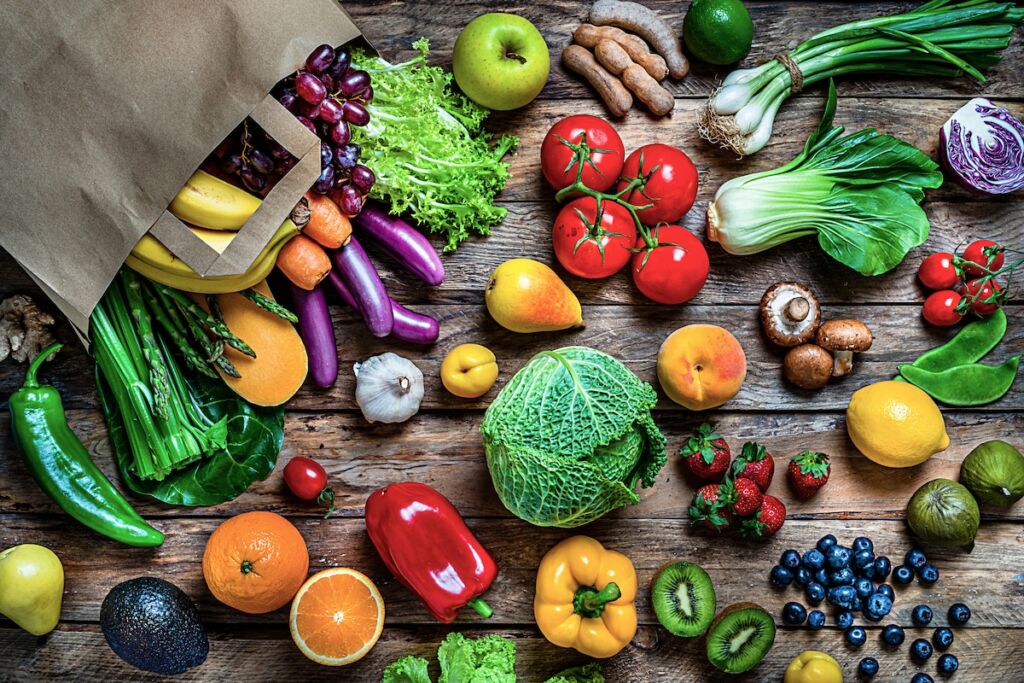
Build food systems based on the culture, identity, tradition, social and gender equity of local communities that provide healthy, diversified, seasonally and culturally appropriate diets.
Biodiversity

Maintain and enhance diversity of species, functional diversity and genetic resources and thereby maintain overall agroecosystem biodiversity in time and space at field, farm and landscape scales.
Fairness
Support dignified and robust livelihoods for all actors engaged in food systems, especially small-scale food producers, based on fair trade, fair employment and fair treatment of intellectual property rights.
Connectivity
Ensure proximity and confidence between producers and consumers through promotion of fair and short distribution networks and by re-embedding food systems into local economies.
Land & Natural Resource Governance

Strengthen institutional arrangements to improve, including the recognition and support of family farmers, smallholders and peasant food producers as sustainable managers of natural and genetic resources.
Synergies
Enhance positive ecological interaction, synergy, integration and complementarity among the elements of agroecosystems (animals, crops, trees, soil and water)
Participation
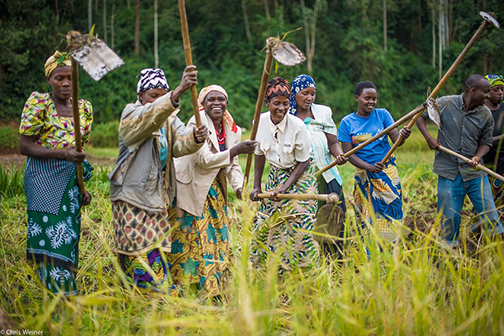
Encourage social organization and greater participation in decision-making by food producers and consumers to support decentralized governance and local adaptive management of agricultural and food systems.
Recycling

Preferentially use local renewable resources and close as far as possible resource cycles of nutrients and biomass.
Input Reduction
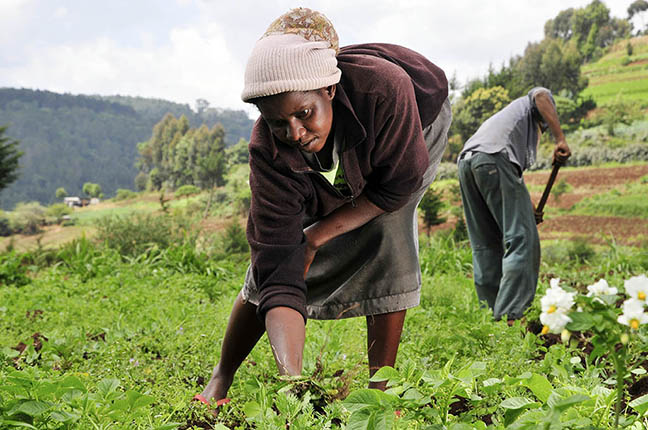
Reduce or eliminate dependency on purchased inputs and increase self-sufficiency.
Soil Health
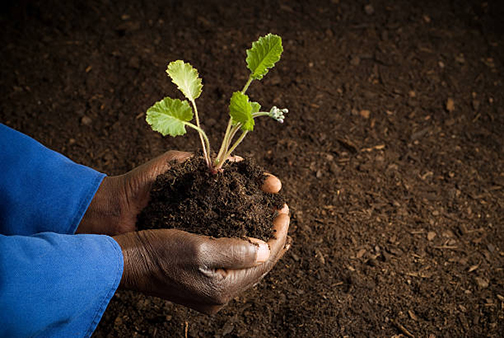
Secure and enhance soil health and functioning for improved plant growth, particularly by managing organic matter and enhancing soil biological activity.
Animal Health

Ensure animal health and welfare.
Economic Diversification
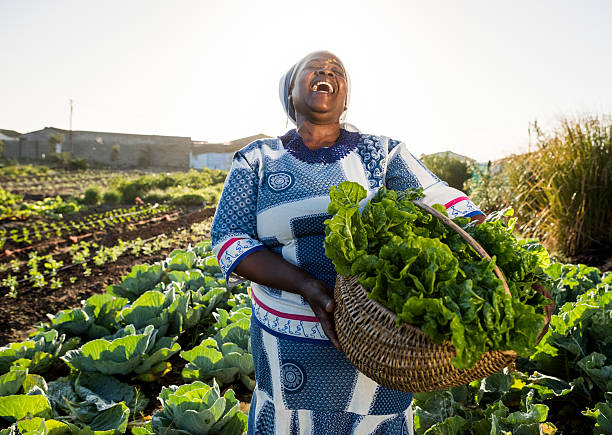
Diversify on-farm incomes by ensuring that small-scale farmers have greater financial independence and value addition opportunities while enabling them to respond to demand from consumers.
Agroecology and the Sustainable Development Goals
The 2030 Agenda for Sustainable Development calls for a new agricultural approach to ensure sufficient, safe and nutritious food respecting human rights. We have a common vision for sustainable food and agriculture, and agroecology is a key response to guide the sustainable transformation of our food systems.
Implementation of principles rooted in agroecology advances 15 of the 17 SDG’s.


No Poverty
Family farming, herding and artisanal fisheries and aquaculture provide livelihoods for many of the world’s rural poor. Agroecological approaches support food producers in reducing production costs, translating into greater income, economic stability and resilience.

Zero Hunger
Agroecological systems optimize the use of local and renewable resources and knowledge. This enables agricultural production systems to harness ecosystem benefits such as pest control, pollination, soil health and erosion control while ensuring productivity. The conservation and sustainable use of biodiversity leads to robust ecosystem services and sustainable agriculture.

Good Health & Well-Being
By minimizing the use of potentially harmful agro-chemical inputs, agroecology reduces agriculture’s negative effects on both human and environmental health. By re-localizing diets, agroecology can help to inform sustainable and healthy diets.

Quality Education
Agroecology depends on knowledge adapted to local contexts by food producers and other actors. It delivers relevant and practical knowledge through empowering peer-to-peer systems, enhanced with the knowledge of formal scientists.

Gender Equality
Women have a central role in agroecology. They are often custodians of healthy and traditional diets and are key players in sustainable food systems, from the home, to the field, to the market and beyond. Agroecology has the potential to advance women’s rights, self-determination and autonomy.

Clean Water & Sanitation
Agroecology prevents surface water and groundwater pollution and contamination. It promotes practices that are efficient in water use, enhances soil water retention, and values locally adapted crops that require less (or no) irrigation, allowing safer and more sustainable aquifer storage, recovery and recharge.

Decent Work & Economic Growth
Agroecological approaches create new decent rural employment opportunities for youth and women. The increased resilience of agroecological production systems helps to better maintain existing jobs, supporting rural livelihoods and communities.

Reduced Inequalities
Agroecology gives priority to the most marginalised and vulnerable sectors of society: rural women, youth, family farmers and indigenous peoples. Agroecology has the potential to address the inequality of the food system by providing locally–based solutions to specific contexts and territories.

Sustainable Cities & Communities
Agroecology enhances diversification to achieve sustainable and healthy diets and food and nutrition security. Agroecological food systems have proven, in many local contexts, to be exemplary providers of high-quality nutritious, healthy and adequate diets, preserving and promoting local food traditions and traditional knowledge. By shortening value chains, agroecology contributes to the reduction of food losses and waste.

Climate Action
Agroecology helps mitigate against climate change and its impacts. It reduces the emission of greenhouse gases by promoting integrated production systems that are less dependent on energy from fossil fuels and that store and fix carbon. By promoting diversified and integrated production systems, agroecology facilitates resilience and adaptation to a changing climate.
Newsletter
Here are some helpful tips for you
Agroecological farming can effectively support food production for a growing population, contrary to worries that it might reduce crop yields. Studies indicate that agroecological methods can increase yields sustainably, with an average increase of 16% compared to conventional practices. While traditional farming may offer short-term gains through synthetic fertilizers, agroecology emphasizes long-term resource management. Additionally, agroecology enhances nutrition by promoting diverse crops and livestock, ensuring access to essential nutrients. Given challenges like climate change, agroecology proves resilient and underscores the need for dietary changes and reduced food waste to achieve food security.
Agroecology has been shown to be economically viable, often more profitable than traditional farming methods. Evidence indicates that agroecological practices can yield higher outputs, as demonstrated by a study showing small farms in Senegal, India, and Brazil achieving productivity increases of 17%, 32%, and 26-48%, respectively. Additionally, these methods lead to higher net incomes, with increases ranging from 14% to 49%, primarily due to better market prices for agroecologically grown products. Agroecology also enhances resilience to pests and climate changes, contributing to sustainable profitability over time.
Agroecology is often perceived as suitable only for small-scale farmers; however, evidence indicates that it is beneficial for larger operations as well. Studies show that farmers implementing agroecological methods can increase both crop yields and income, with findings from Guatemala highlighting that agroecological farms sell a greater proportion of their produce compared to conventional farms. Moreover, agroecology is not limited to developing countries; it has proven profitable for farmers in 13 European nations, where many utilize these methods, though they seldom acknowledge it. Additionally, large farms in both the Americas and Europe are successfully adopting agroecology practices, suggesting that a broader transition to these methods is feasible, despite existing knowledge and research gaps.
Evidence indicates a rapid and accelerating loss of biodiversity, primarily driven by agriculture. Predictions suggest that species loss may match the extinction levels seen during the dinosaurs’ era by mid-century. Analyses highlight the detrimental effects of conventional farming, implying an urgent need for alternative agricultural practices. Organic agriculture promotes biodiversity, with higher species richness and abundance compared to conventional methods. While concerns exist regarding land use in agroecological practices, studies suggest that such practices can enhance biodiversity and productivity without increasing agricultural land usage. Agriculture, which occupies over 40% of the Earth’s surface, must adopt practices that safeguard biodiversity, positioning agroecology as a vital solution in this transformation.
Evidence indicates a rapid and accelerating loss of biodiversity, primarily driven by agriculture. Predictions suggest that species loss may match the extinction levels seen during the dinosaurs’ era by mid-century. Analyses highlight the detrimental effects of conventional farming, implying an urgent need for alternative agricultural practices. Organic agriculture promotes biodiversity, with higher species richness and abundance compared to conventional methods. While concerns exist regarding land use in agroecological practices, studies suggest that such practices can enhance biodiversity and productivity without increasing agricultural land usage. Agriculture, which occupies over 40% of the Earth’s surface, must adopt practices that safeguard biodiversity, positioning agroecology as a vital solution in this transformation.
A primary strategy for enhancing the sustainability of food systems and combating rural exodus is to provide agricultural opportunities for rural youth. Agroecology, with its focus on social values and knowledge intensity, is poised to achieve this by creating more labor-intensive jobs compared to conventional agriculture. Case studies demonstrate that peasant movements often engage youth in agroecological practices, fostering leadership and inclusivity. In Burkina Faso, initiatives in soil conservation have resulted in new youth workgroups. Additionally, agroecological practices contribute to climate resilience, crucial for young individuals facing the climate crisis. A recent HLPE report identifies agroecology as vital for youth engagement and suggests policies to promote agroecological principles and community-based research. Despite promising findings, further empirical research is needed to quantify the impact of agroecological practices on youth employment.
Sustainable agriculture encompasses a broad spectrum of concepts aimed at producing food and nutrition while preserving economic, social, and environmental foundations for future generations. Notable terms associated with sustainable agriculture include agroecology, sustainable intensification, conservation agriculture, and organic agriculture, among others. Effective sustainable agriculture recognizes the need to integrate ecological, social, and economic dimensions and promote supportive governance. Agroecology is highlighted as a holistic, sustainable approach according to FAO’s elements and HLPE’s principles.