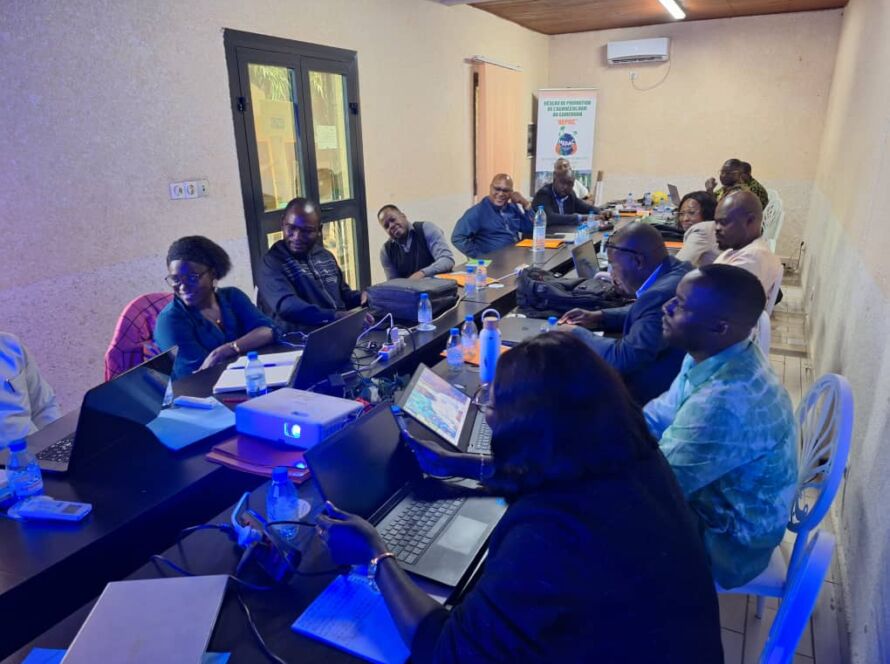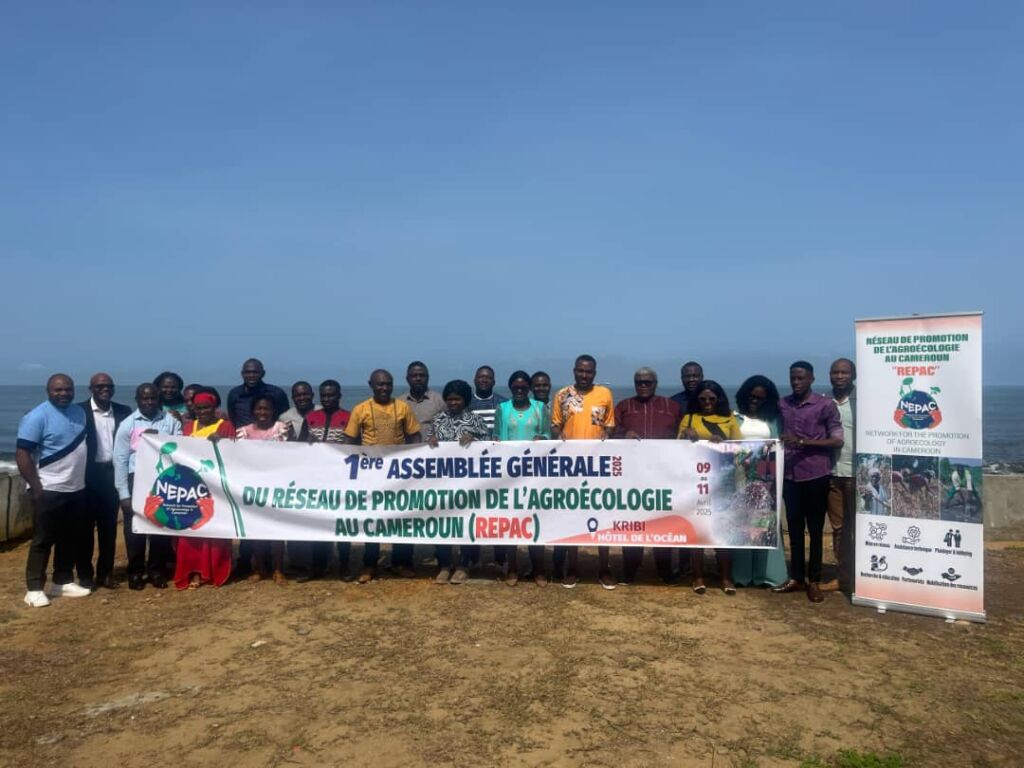
While local markets flourish, the policy framework for agroecology is also being strengthened. From April 9 to 11, 2025, the Agroecology Promotion Network in Cameroon (NEPAC)—of which SAILD serves as the technical secretariat—held its first General Assembly of the year in Kribi.
Strengthening the Network
After two years of existence, REPAC has established a solid foundation. Under the leadership of President Aristide Tchagom, 25 civil society organizations gathered to review a successful 2024, which featured:
Capacity Building: Strengthening the skills of its members and ensuring Cameroonian representation at international events.
Regional Forums: Organizing and participating in the regional agroecology forum in Yaoundé.
Institutional Recognition: Being selected by the Ministry of Forests and Wildlife (MINFOF) to map cocoa orchards—a clear sign of the network’s growing influence.
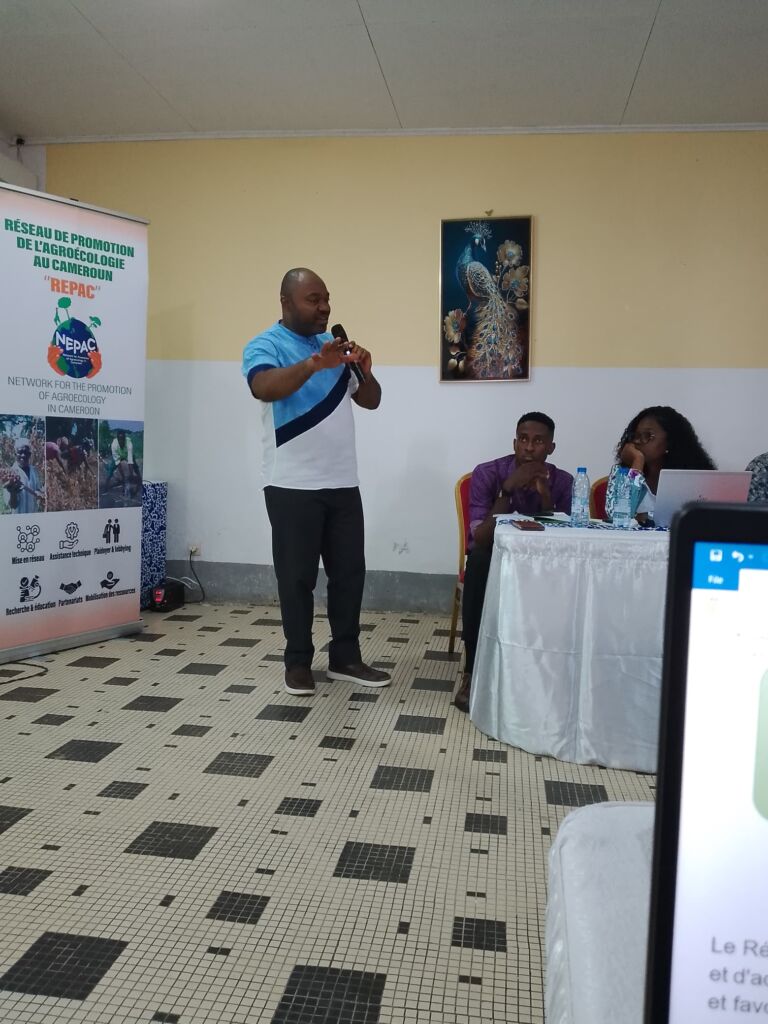
The 2025 Roadmap: Influencing National Climate Policy
The assembly in Kribi wasn’t just about looking back; it was about setting a bold course for 2025. The network is currently finalizing its internal regulations and strengthening its specialized working groups..
The most critical mission for the coming year is integrating agroecology into Cameroon’s revised Nationally Determined Contribution (NDC). REPAC is leading reflections to identify exactly where agroecological practices can be highlighted within national climate strategies. The network will soon propose a formal roadmap to the Ministry of Environment, offering concrete solutions for a greener, more resilient Cameroon.
A Growing Movement
The success of both the local Organic Market and the strategic advocacy of REPAC confirms that agroecology is a multi-level movement—connecting healthy soil in the village to high-level policy in the capital.