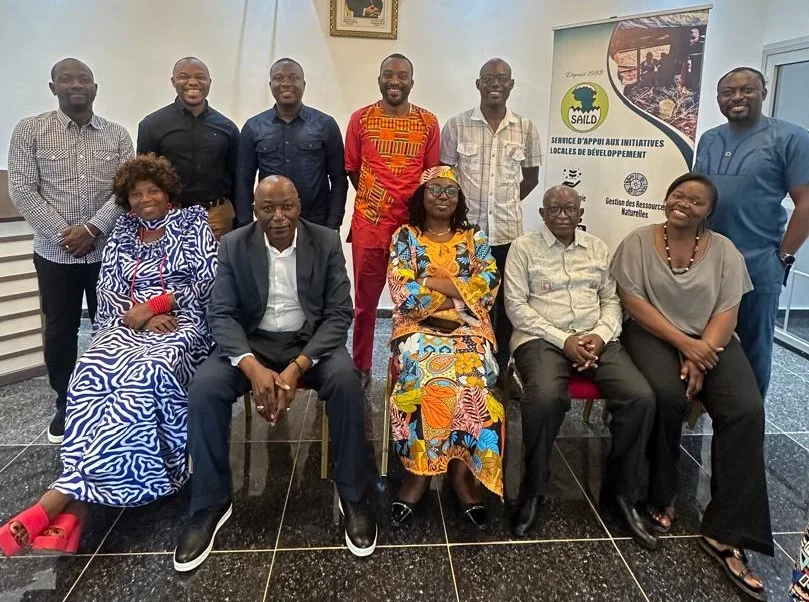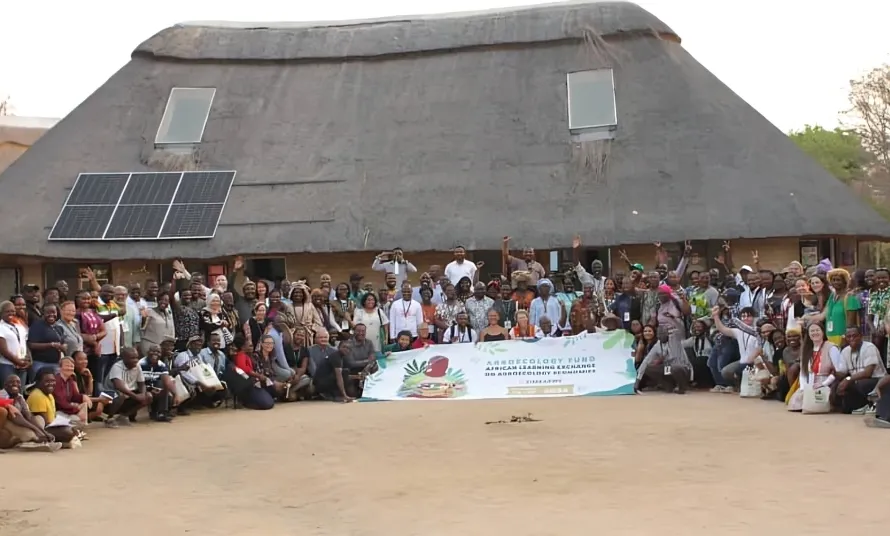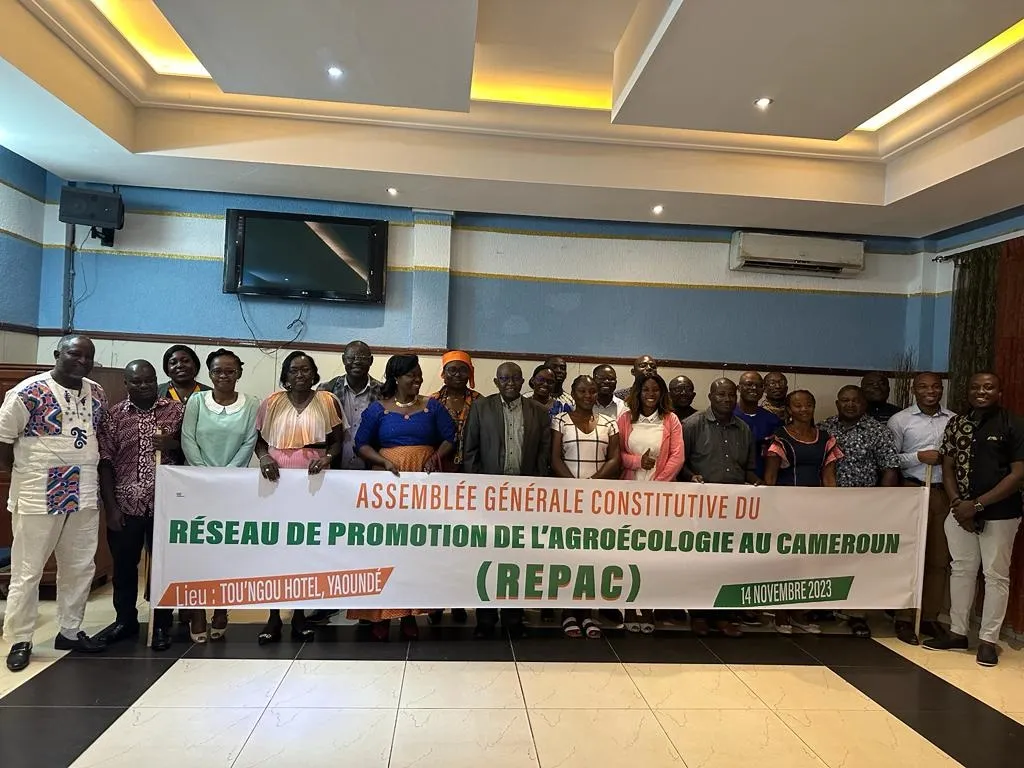
The launch of the Agroecology Promotion Network in Cameroon (REPAC) on November 14 in Yaoundé marked the culmination of a passionate, years-long participatory process. Twenty civil society organizations gathered at the Tou’Ngou Hotel to validate a charter and establish a formal framework for food sovereignty and climate resilience.
A Journey of Collaboration
The process began in 2022 with a deep dive into the state of agroecology in Cameroon. Facilitated by SAILD, stakeholders realized that while many were promoting sustainable farming, their efforts were scattered. “During the development of the strategy, we asked ourselves how to implement it effectively,” explains Kizito Sone, an assistant on the project Scaling Up Agroecology to Strengthen Food Security and Diversity in the Congo Basin. This project, supported by the Full Circle Foundation, provided the necessary framework to move from a shared vision to a formal institution.
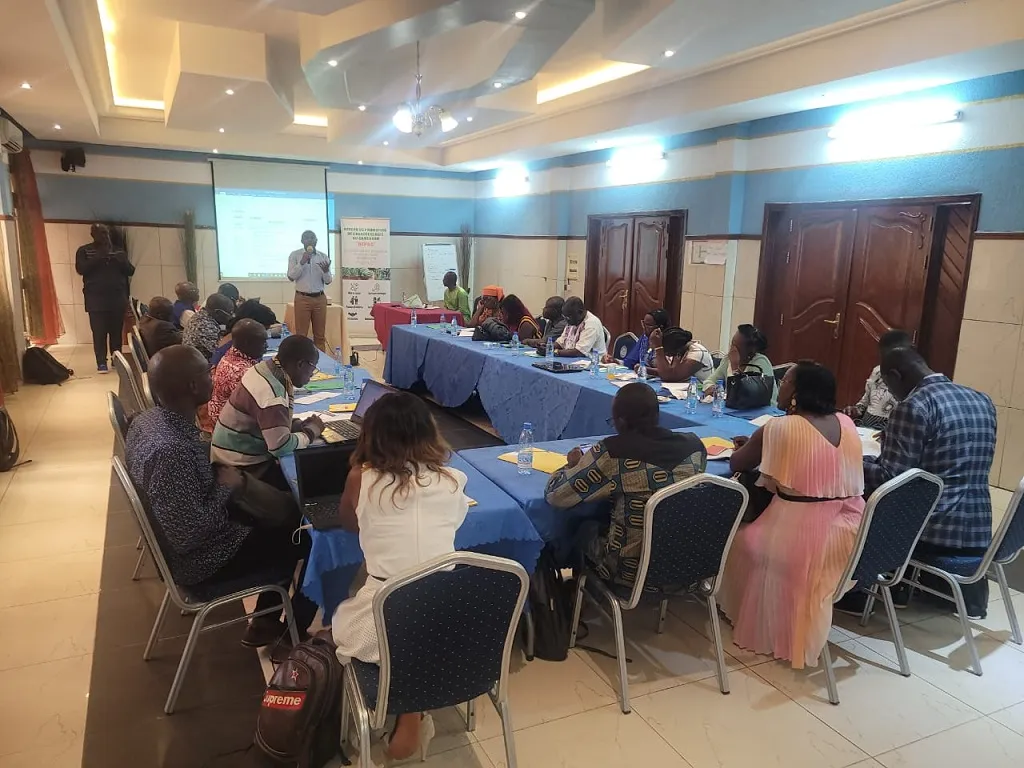
Governance and Shared Leadership
By 12:30 PM on that founding day, a consensual leadership team was established to guide the network’s mission:
- Presidency: Green Development Advocates (GDA)
- Vice-Presidency: Environment and Rural Development Foundation (ERuDeF)
- Technical Secretariat (Executive Body): SAILD
Scaling Up and Institutional Recognition
Since its inception, REPAC has transformed from a nascent idea into a credible institutional partner. A major milestone was its selection by the Ministry of Forests and Wildlife (MINFOF) to map cocoa orchards—a strong signal that civil society’s expertise is now being integrated into national agricultural management.
The 2025 Roadmap: Influencing Climate Policy
The current priority is integrating agroecology into Cameroon’s revised Nationally Determined Contribution (NDC). REPAC is finalizing a formal proposal for the Ministry of Environment, positioning agroecological practices as key solutions for carbon sequestration and community-led climate adaptation.
A Growing Movement
The journey from the constitutive assembly in Yaoundé to the recent expansions in Maroua and Kribi confirms that agroecology is a multi-level movement. Whether through local market stalls or high-level policy advocacy, the goal remains unchanged: a resilient and equitable food system for all of Cameroon.