By Baltazar Atangana Gender and Inclusion Advisor
The recent position paper from the Network for the Promotion of Agroecology in Cameroon (REPAC) regarding the EU Deforestation Regulation (EUDR) serves as a catalyst for a broader analysis: a compliance process that is moving forward, but risks leaving small-scale producers—particularly women—behind.
In March 2026, REPAC published a position paper on Cameroon’s alignment with the European Union Deforestation Regulation (EUDR). The document raises a question that many prefer to avoid: if Cameroon claims to be ready for the EUDR, is this readiness for the smallholders or only for exporters and institutions? This is not a rhetorical question. It concerns how a trade regulation from Europe can abruptly reshape the economic and social balance of an agricultural sector that employs hundreds of thousands of local families.
A Regulation that Shuffles the Deck Without Changing the Rules
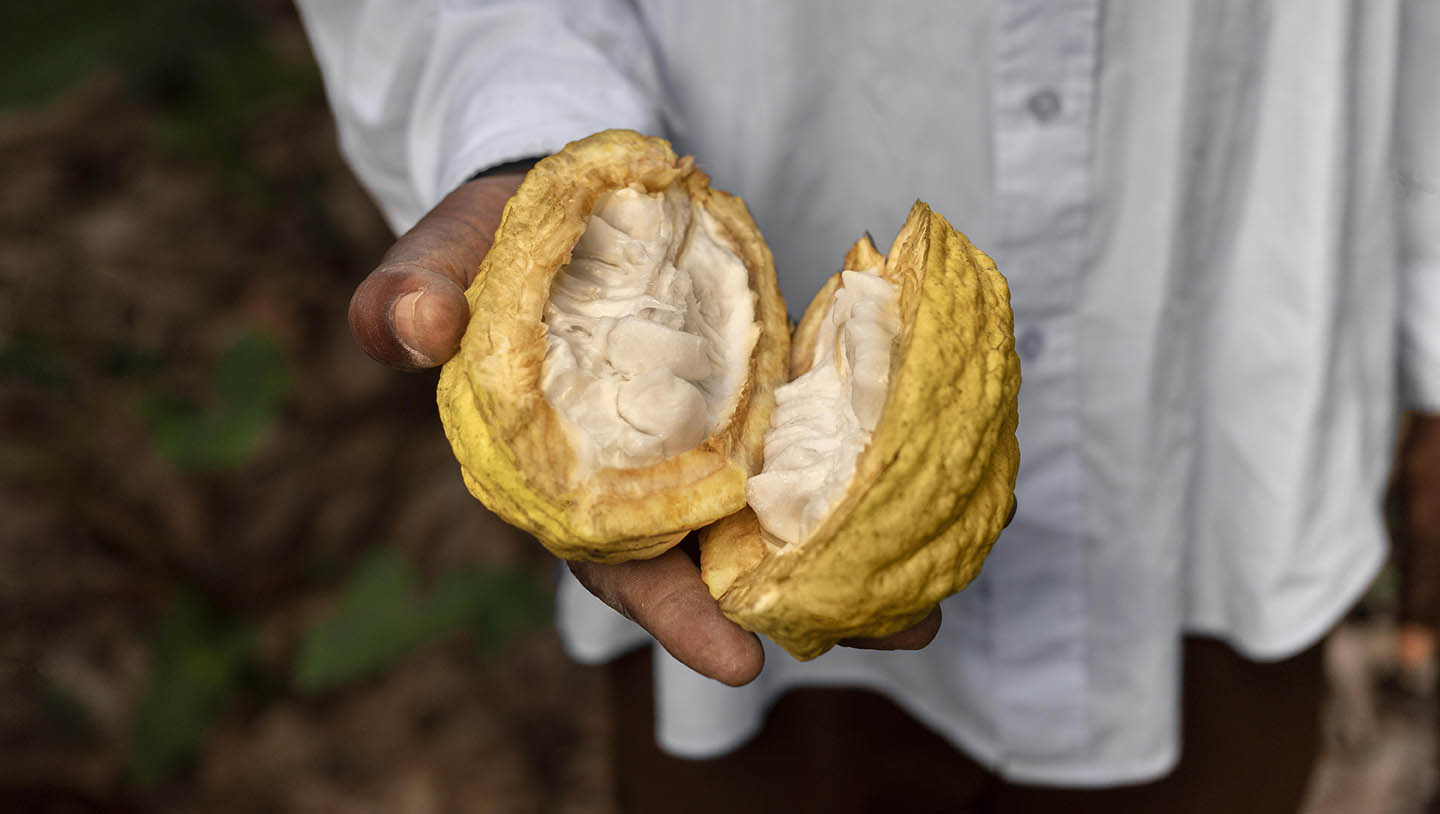
The cocoa sector is the backbone of Cameroon’s rural economy. In 2024, it generated nearly 1,000 billion FCFA in export revenue. Within this context, Regulation (EU) 2023/1115 has become an unavoidable reality for any operator wishing to access the European market. The EUDR requires proof that cocoa has not contributed to deforestation after December 31, 2020, that its production complies with national laws, and that every plot is traceable to its GPS coordinates.
In response, Cameroon has launched several initiatives. The Cocoa and Coffee Interprofessional Council (CICC) was tasked with geolocating all plots nationwide. A “Due Diligence Manual” was developed and endorsed by the state, listing over thirty legal requirements that cocoa destined for Europe must meet. Additionally, the GEOSHARE platform was established to allow exporters to exchange geolocation data. The European Parliament’s decision to postpone the implementation date to December 30, 2026, was welcomed by authorities as an opportunity to finalize compliance.
However, REPAC’s note offers a more nuanced view. In July 2025, during a readiness forum in Yaoundé, the CICC announced it had geolocated nearly 550,000 plots. Yet, on the ground, farmers in the village of Ekombité testified that they had never been part of a geolocation operation. One producer, who has farmed for over twenty years, said he did not even understand the term, adding that no agent had visited his field in years. Data duplication between actors, a lack of centralization, and the fact that more than half of producers remain unidentified reveal a reality far more fragmented than institutional figures suggest. It is not that Cameroon isn’t making progress; it is that this progress is not benefiting those who need it most.
Three Criteria for Compliance, Three Paths to Exclusion
The report analyzes the three pillars of the EUDR and how each uniquely weakens small-scale Cameroonian producers:
- Legality: Smallholders face a level of bureaucratic complexity that is out of reach. The Due Diligence Manual identifies over thirty legal requirements covering land rights, labor laws, and environmental protection. However, the coexistence of customary and statutory law in Cameroon means the vast majority of producers lack formal land titles. In a sector where labor is primarily familial and informal, these documentation requirements belong to a world alien to the average cocoa farmer.
- Traceability and Data Ownership: There is a central tension regarding who owns the data. Currently, each exporter geolocates the fields of the producers attached to them and maintains exclusive control over that data. The producer, despite being the primary party concerned, has no access to it. This creates a structural dependency where the company that financed the geolocation becomes, by default, the only possible buyer. A farmer in Ngoro summarized it bluntly: he already knows who he will sell to for the next several seasons because that buyer holds his coordinates. The data has, in effect, decided for him.
- Zero Deforestation: In Cameroon’s cocoa-growing regions—characterized by high rainfall—fallow land abandoned for five to ten years can develop dense tree cover. This is often indistinguishable from a natural forest on satellite imagery. This ecological reality makes proving compliance difficult for producers working on unregistered land using traditional extensive agriculture. Furthermore, the national policy to increase production to 640,000 tons by 2030 (up from 300,000) largely relies on expanding cultivated areas, a trajectory that directly contradicts European requirements.
The Invisible Pillar: Women at Risk of Greater Exclusion
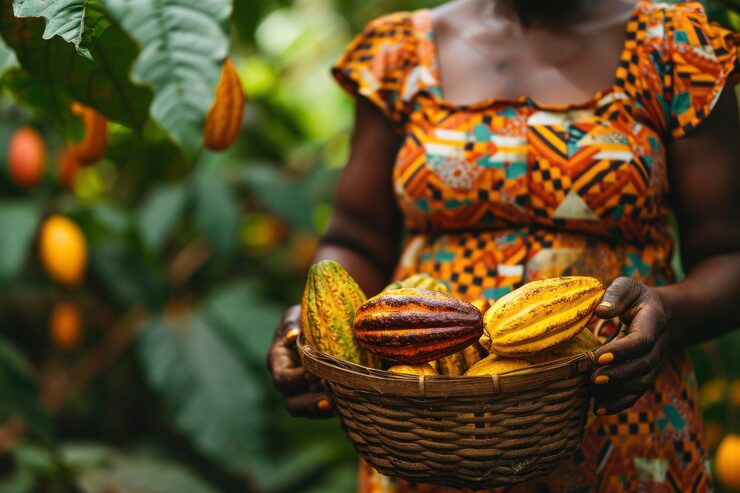
While the REPAC note does not focus primarily on gender, this is where the issue is most urgent. A January 2026 study by the Center for Environment and Development (CED) and Fern, titled “Women: The Backbone of Cocoa Production in Cameroon,” highlights a structural paradox.
Women perform a significant portion of the agricultural work—from tilling the soil to breaking pods and organizing labor. Yet, they remain invisible in land registers, cooperative leadership, commercial contracts, and income distribution. The study estimates that women control only 20% to 30% of the income generated by cocoa, which is spent almost entirely on household expenses.
This imbalance is compounded by massive land insecurity. Of the 191 female producers surveyed, 87% face land insecurity, even when their access is based on family arrangements. Since a primary EUDR criterion is proof of land-use rights, a woman farming without a title is, by definition, “non-compliant,” regardless of her work’s quality. Furthermore, 68% of women surveyed had never heard of the EUDR.
Toward an Operational Intersectional Approach
The data points to the need for an intersectional approach to compliance—one that recognizes how gender, land insecurity, geographical isolation, and economic marginalization combine to create specific types of exclusion.
Making this approach operational would require:
- Geolocation programs that include awareness modules designed for women.
- Requirements for cooperatives to ensure effective female representation in decision-making.
- Compliance data disaggregated by sex to monitor real inclusion.
The REPAC position paper is a valuable contribution to the ongoing debate. It does not reject the EUDR but demands that it be applied with the rigor owed to those most exposed to its constraints. The delay to December 2026 is not a victory in itself; it is an opportunity that Cameroon and the EU must not waste. Small producers, especially women, deserve more than a “sustainability” that excludes them.